Case study Metadata Model Ataccama

Asset Layout Editor. Replacing a hidden JSON editor with a research-grounded pin model.

Role
Product designer (intern) at Ataccama
Timeline
6 weeks
Surface
Metadata Model · Page layout
Output
V5 prototype · Three-audience handoff

The JSON editor was technically usable. Nobody could actually use it.

Customers routinely extend Ataccama ONE's metadata model with custom properties, Region, Data Owner, Classification. The historical way to surface them on entity detail pages was a Monaco-based JSON editor hidden behind a feature flag, unusable by anyone who didn't write code.

Customer-facing teams complained when the flag came off. The brief: remove the JSON editor entirely and replace it with something an admin or a consultant could actually use.

Real demand, no real solution.

The product inbox held the evidence, concentrated demand across DG, DQ, ONE Platform, and Agentic, going unaddressed because the existing solution was developer-only.

The audience was specific: tenant admins and consultants, people who understand the metadata model conceptually but don't write code. Explicitly not for end users or developers.

Product Inbox · Active demand
★ PI966 · UI for editing page layout · 6 upvotes
PI411 · Editing layout of side pane
PI444 · Custom property selection · 4 upvotes
PI856 · Custom attribute visibility
PI986 · Custom CI attributes in search
PI765 · Hide/remove sections
PI972 · Configure Attributes expander

One escape hatch. Everything else locked.

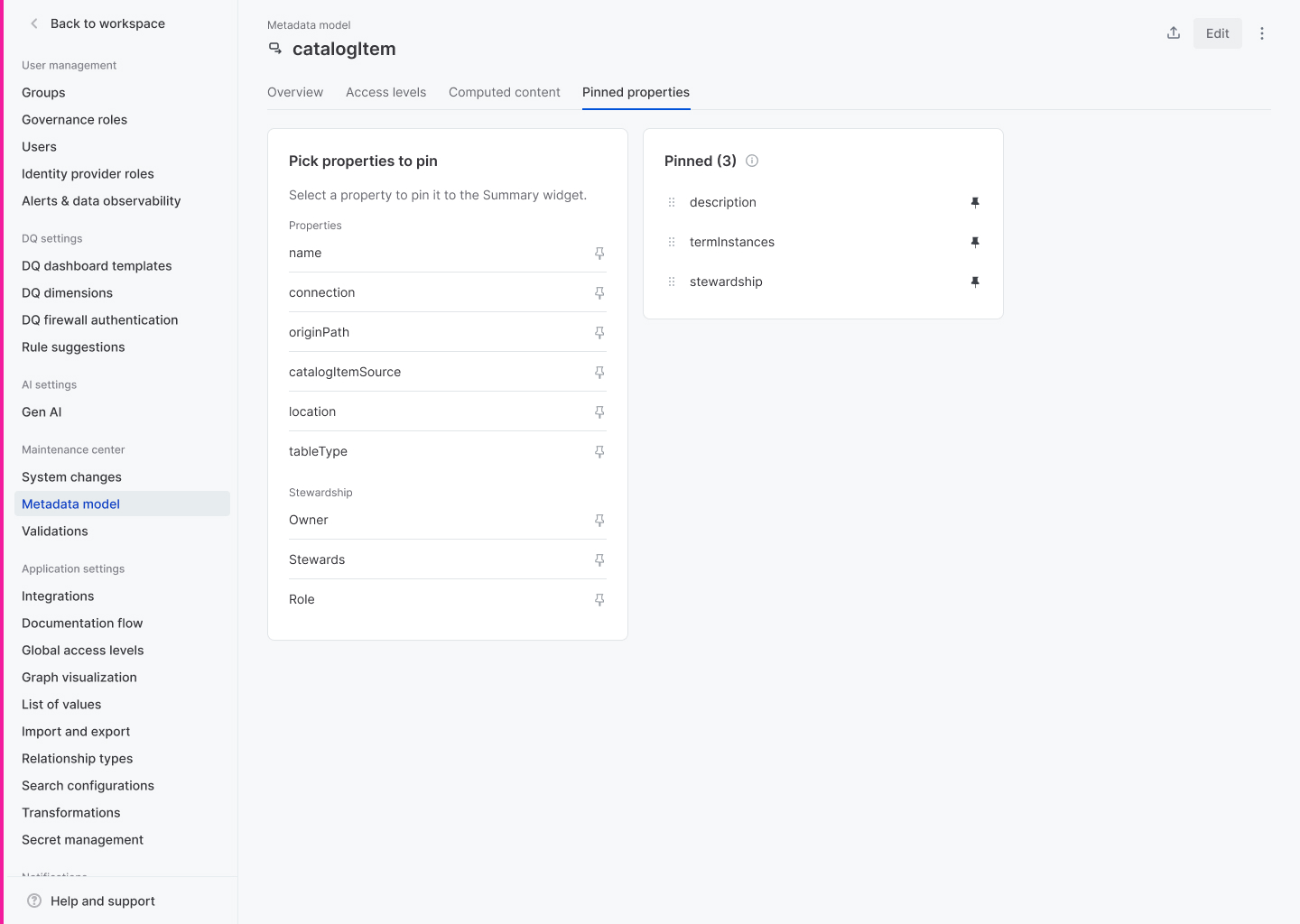
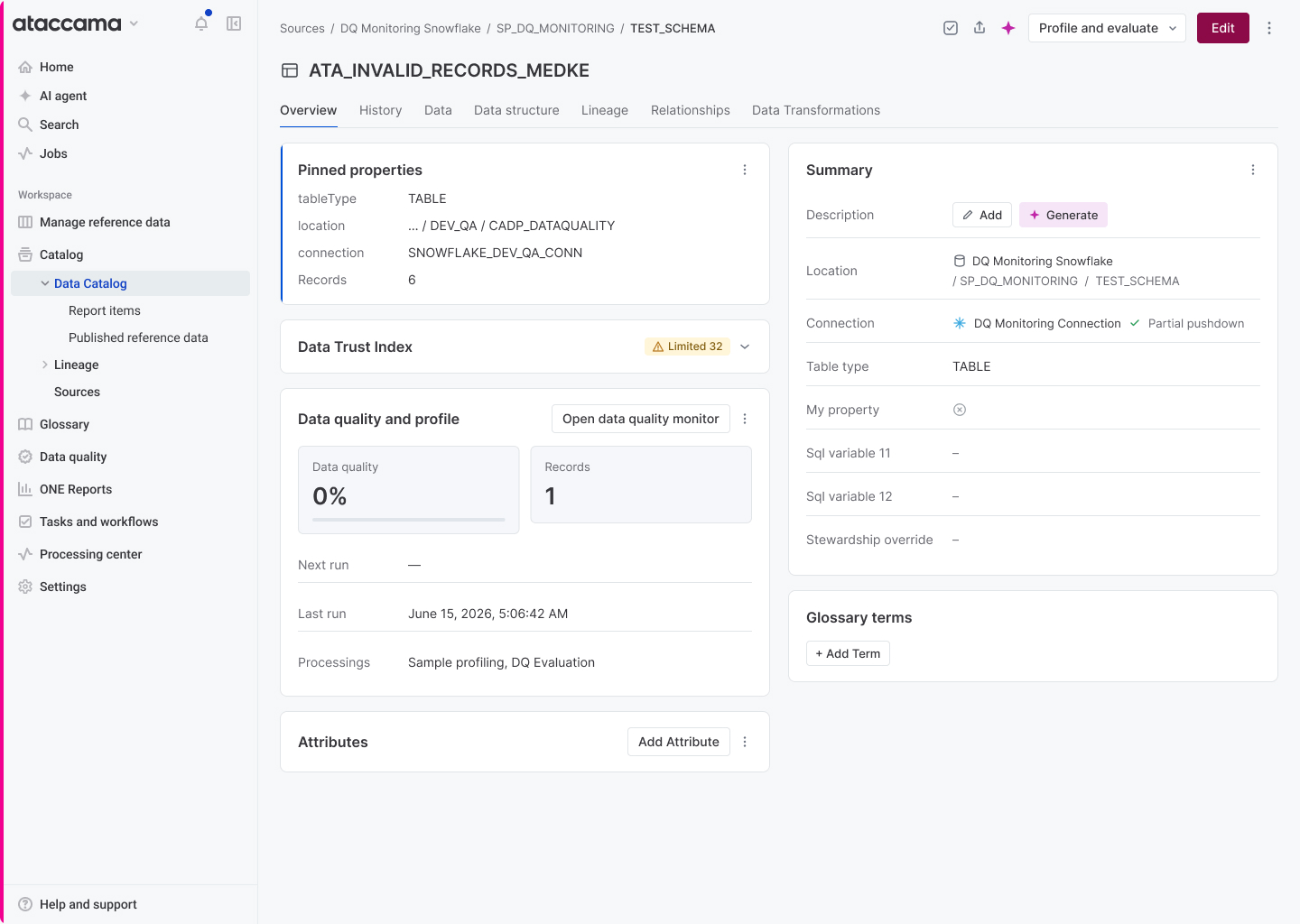
A two-zone model: a full-width pinned-properties band where admins curate which fields appear at the top, sitting above a locked default layout that Ataccama owns.

The pattern is "shell-plus-accent", universal across every competitor I studied (Jira, Collibra, Salesforce, Atlan, Harness, ServiceNow). A dominant, system-controlled layout with one explicit surface for promoting individually-important content.

Each one came from a finding in the research.

01

Lock the structural scaffolding

Header, widgets, column structure, all curated by Ataccama. Matches Collibra's "system content controlled by Collibra."

02

One escape hatch, not a full editor

A single pinned-properties band. Admin curates which fields appear there. Everything else stays where Ataccama designed it.

03

Tenant-scoped, not per-user

Every data-catalog peer is tenant-scoped. Per-user pins would have broken consultant-shares-screens consistency.

04

Pin individual properties

The real customer use case is field-level. Section-level customization was over-coarse for the actual need.

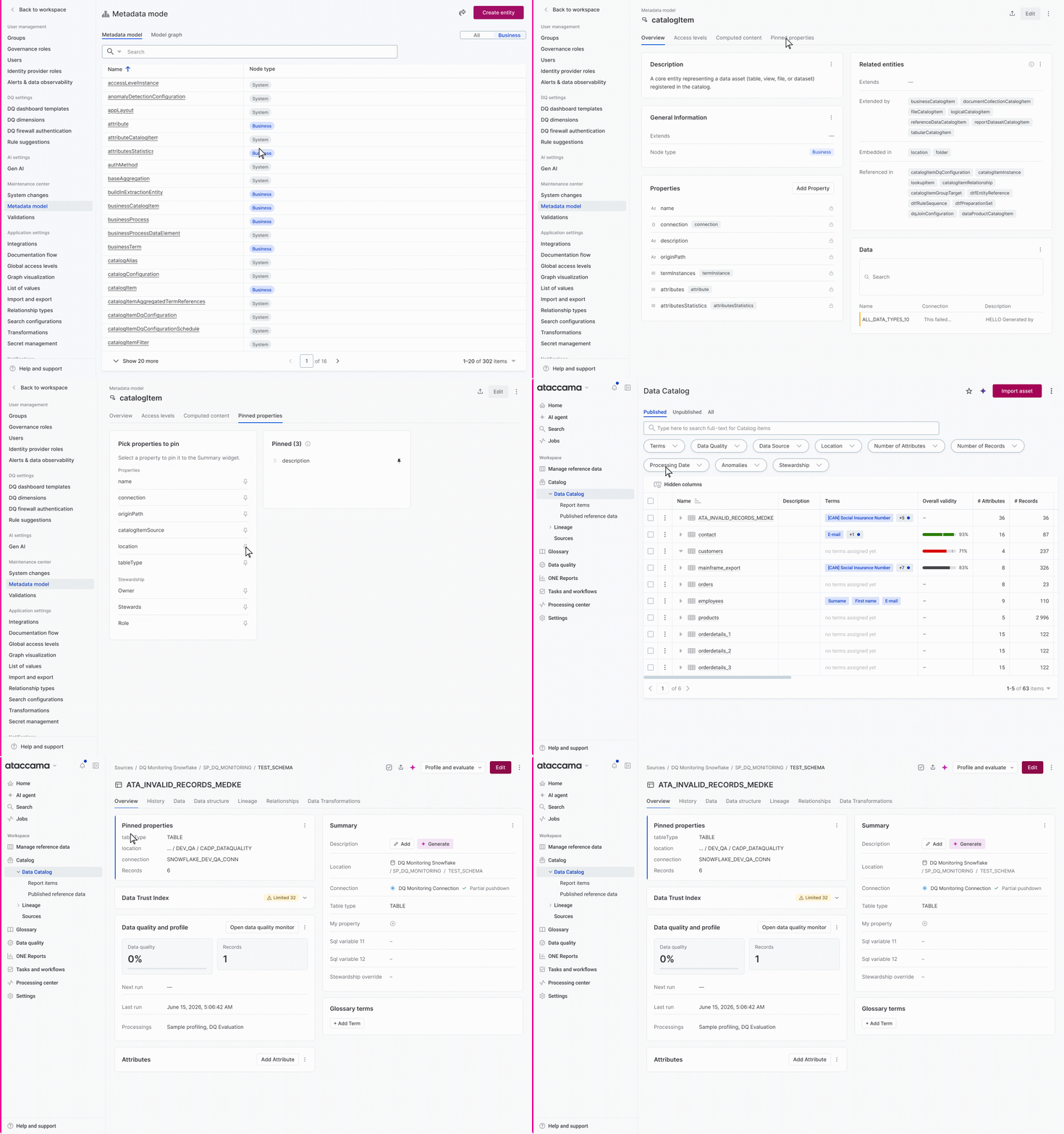
V5 wasn't my first idea, it was synthesis. Without V1–V4 showing what didn't work, V5 would have looked like V1.

On building five prototype variants

Three inflection points across six weeks.

01

The PM pivot, April 15

I brought a full layout-editor prototype to my first PM meeting, expecting feedback on interactions. Matej proposed the pin concept in five minutes. Customization has a cost, product identity, test stability, upgrade path.

02

The 22-source research

Going deep on six competitors surfaced one universal pattern: shell-plus-accent. A dominant, system-controlled layout with one explicit surface for promoting individually-important content.

03

The buddy meeting

I brought a lean recommendation on each of six open decisions, not open exploration, "take this position and tell me why I'm wrong." We closed all six in 30 minutes.

Five principles that travel beyond this project.

01

Bring problem + evidence early

Let PM bring constraints. Don't fall in love with your prototype.

02

Research turns proposals into arguments

"12+ upvotes, Collibra 46% → 74%" is a different conversation than "I think we need this."

03

Sketch before prototyping in code

Code iteration is fast but expensive when the direction isn't validated.

04

Five variants were not waste

V5 was synthesis. Without exploration, "first idea" is rarely the answer.

05

Fast convergence needs lean recommendations

Strong defaults invite quick critique. Open questions invite long meetings.

← Previous: Import metadata Back to work